| ☁ London 16°C
Asian Nations Move to Strengthen Oil Reserves and Expand Renewable Energy
ewable energy and connect electricity networks, as supply risks from the Iran war highlight the region’s exposure to disruptions in global energy trade.
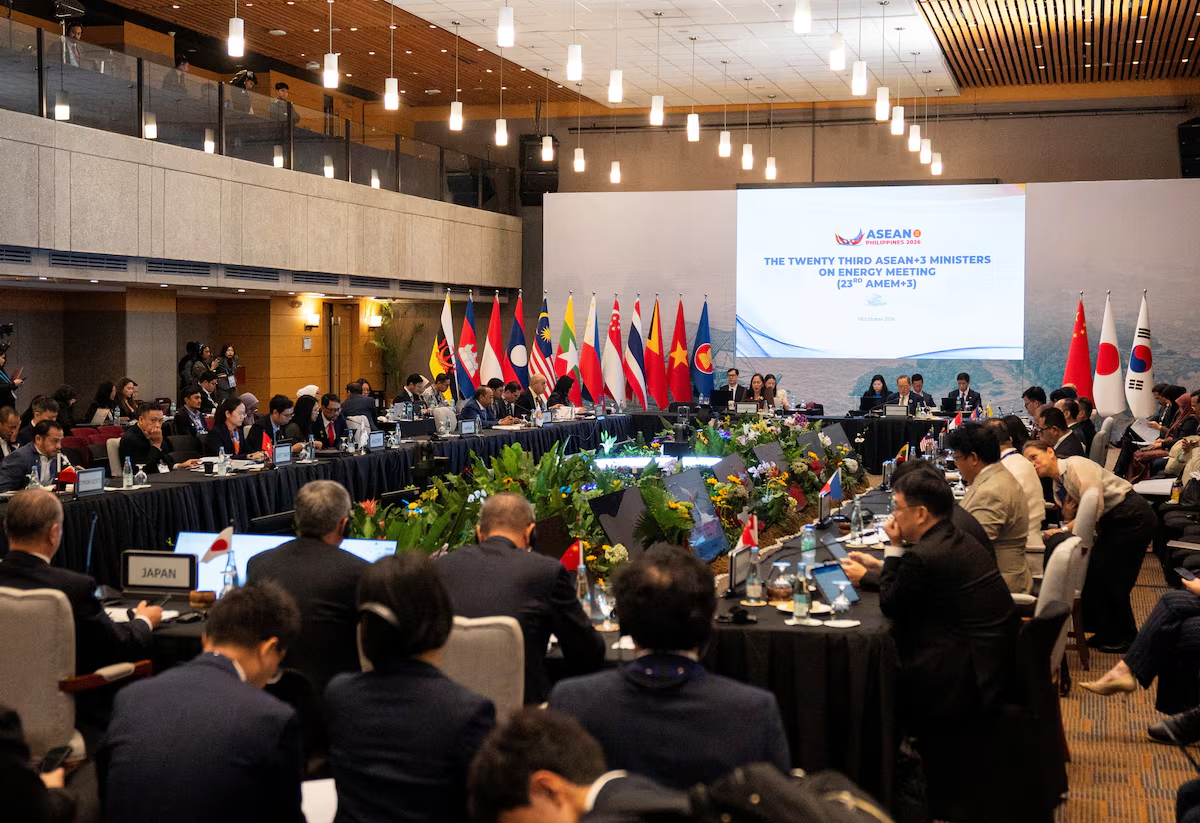
Nine Southeast Asian nations, together with Japan and Australia, said in a joint statement that they would support national oil stockpiling systems and explore voluntary regional stockpiling. The statement followed regional energy meetings in Pasay City, Metro Manila. The announcement concerns plans and cooperation; it does not mean a new shared oil reserve is already operating.
Japan said it had agreed on action plans with Asian partners to increase crude oil reserves across the region. It also held discussions with Saudi Arabia and the United Arab Emirates, which indicated a willingness to cooperate on building Asia’s stockpiling capacity, according to Japan’s state minister for trade.
The Philippines, which imports nearly all of its oil and fuel, plans to establish a national reserve by the end of 2027. Energy Secretary Sharon Garin said the reserve could later be developed into a regional stockpile. Countries would decide whether to host stored supplies, and the host country would determine the terms for their sale.
The group also set renewable energy goals: 30% of total primary energy supply and 45% of installed power capacity. The region is currently below those figures. Renewables accounted for 14.1% of primary energy, while clean sources made up 33.7% of installed power capacity, according to the energy outlook cited by Reuters. Ministers also reached an enhanced preliminary agreement to speed up development of a regional power grid, an idea first proposed in 1997.
The push reflects the region’s reliance on energy shipped through vulnerable routes. Reuters reported that before the Iran war began, about 80% of oil transported through the Strait of Hormuz from the Gulf went to Southeast Asia. Building reserves could provide a buffer during supply interruptions, while renewable power and regional electricity links could reduce dependence on imported fuels over time.
The next challenge will be turning targets and preliminary agreements into funded infrastructure, reliable stockpiles and working cross-border energy systems.